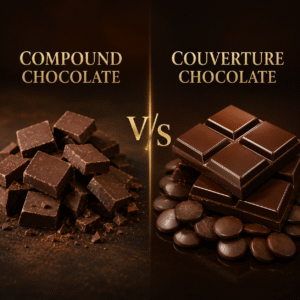
 Couverture chocolate is considered the gold standard among chocolatiers and pastry chefs, but how does it truly differ from compound chocolate? The answer lies in the composition. Couverture chocolate contains a higher percentage of cocoa butter, usually around 30-40%, while compound chocolate is made with vegetable fats such as palm kernel oil. In fact, for something to be legally called ‘chocolate,’ the only fat in the ingredients can be cocoa butter. Understanding these differences is essential when choosing between couverture milk chocolate, dark couverture chocolate, and compound varieties. In this guide, I’ll walk you through the key distinctions in composition, tempering requirements, applications, and couverture chocolate price considerations to help you make informed decisions for your baking needs.
What is Couverture Chocolate and Compound Chocolate
What is couverture chocolate?
Couverture chocolate is premium-quality chocolate containing a high percentage of cocoa butter. It delivers rich flavor, a glossy finish, and a smooth texture.
Benefits of Couverture Chocolate:
• Smooth texture
• Rich chocolate flavor
• Glossy appearance
• Better melting properties
• Professional-quality desserts
What is compound chocolate?
Compound chocolate is made using cocoa powder, vegetable fats, sugar, and milk solids. It does not contain cocoa butter as the primary fat source.
Key Features:
• Budget-friendly
• Easy to melt
• No tempering required
• Suitable for bakery production
Difference Between Compound Chocolate & Couverture Chocolate
1. Fat Source
Compound Chocolate: Vegetable fat
Couverture Chocolate: Cocoa butter
2. Texture
Compound Chocolate: Slightly waxy
Couverture Chocolate: Smooth & creamy
3. Taste
Compound Chocolate: Sweet and simple
Couverture Chocolate: Rich and authentic
4. Tempering
Compound Chocolate: Not required
Couverture Chocolate: Required
Composition and Ingredient Differences
Cocoa Butter vs Vegetable Fats
The fundamental compositional divide between couverture and compound chocolate starts with their fat sources. Cocoa butter contains approximately one-third stearic acid, one-third oleic acid, and one-quarter palmitic acid. This distinctive fatty acid profile creates triglycerides known as POP (1,3-dipalmitoyl-2-oleoyl-glycerol), POS (1-palmitoyl-2-oleoyl-3-stearoyl-glycerol), and SOS (1,3-distearoyl-2-oleoyl-glycerol), which comprise about 80% of cocoa butter’s composition
Compound chocolate, in contrast, relies on lauric acid-based vegetable fats. Palm kernel oil used in the compound contains about 40% lauric acid. This difference in fatty acid structure explains why the two chocolates behave so differently during melting and crystallization.
Cocoa Content Requirements
Dark couverture chocolate demands at least 35% total cocoa solids with a minimum of 31% cocoa butter. Some premium varieties contain as much as 39% cocoa butter. Milk chocolate couverture maintains lower cocoa solids at 25% minimum, but still requires substantial cocoa butter content.
Compound chocolate typically contains under 30% cocoa solids. Many formulations use cocoa powder rather than cocoa mass, with one typical breakdown showing 21% cocoa powder, 34% vegetable fat, and 45% sugar.
Fat Content Comparison
Cocoa butter melts between 34°C and 38°C, closely matching human body temperature. Meanwhile, vegetable fats in compound chocolate melt around 45°C. This 7-10 degree difference dramatically alters how each chocolate behaves in your mouth.
Impact on Taste and Texture
Cocoa butter acts as a reservoir for volatile flavor compounds produced during fermentation and roasting. As a result, couverture chocolate delivers intense cocoa flavor with a silky mouthfeel. The symmetric triglyceride structure provides good snap, gloss, and smooth texture.
Compound chocolate exhibits a waxier texture due to vegetable fats. The lauric acid base creates a slightly greasy mouthfeel with a subdued chocolate taste. You can feel this waxy finish on your tongue when eating compound varieties.
Tempering Requirements and Working Methods
Why Couverture Chocolate Needs Tempering
Cocoa butter crystallizes into six different forms, but only Beta 5 crystals produce the desired qualities in couverture chocolate. Tempering uses heat, cooling, and motion to transform fat crystals until Beta 5 dominates. This process, also called pre-crystallization, creates stable cocoa butter crystals that deliver a glossy finish and firm snap.
Without proper tempering, several problems emerge. Fat bloom appears as grayish streaks or spots when cocoa butter separates and rises to the surface. The chocolate loses its shine, appearing dull or matte instead. Texture becomes soft and crumbly rather than snappy. Untempered chocolate also sticks to molds and refuses to release cleanly.
The three-step tempering process starts with heating the chocolate to melt all existing crystals. Dark chocolate reaches 115°F, while milk hits 110°F, and white chocolate melts at 105°F. Next, you cool the chocolate to around 82°F, which allows both stable and unstable crystals to form. Finally, reheat to working temperature: 88°F for dark, 87°F for milk, and 86°F for white. This final heating melts unstable crystals while preserving the Beta 5 structure.
How Compound Chocolate Melts and Sets
In contrast, compound chocolate skips the tempering step entirely. The vegetable fats replacing cocoa butter don’t form complex crystal structures. You simply melt compound chocolate using a double boiler or microwave and use it immediately. As a result, working with compound varieties becomes faster and more forgiving for beginners.
Temperature Control Guidelines
A digital thermometer is essential for tempering success. Dark couverture chocolate melts at 120-122°F, cools to 80-82°F, then works at 88-91°F. Milk chocolate follows 115-118°F for melting, 80-82°F for cooling, and 84-86°F for working. White chocolate requires lower temperatures: 105-113°F melting, 78-80°F cooling, and 82-84°F working.
When to Use Each Type of Chocolate
Best Uses for Couverture Chocolate
Couverture chocolate performs best when flavor depth and visual presentation matter. Its high cocoa butter content makes it perfect for molded pralines, enrobing truffles, producing glossy chocolate bars, and preparing rich ganache for layer cakes. Professional chocolatiers rely on it for bonbons, dipped fruits, and cookies, where the glossy finish and satisfying snap justify the extra effort. For mousses, crémeux, and fine desserts, couverture adds a depth and smoothness that compound varieties cannot match.
Best Uses for Compound Chocolate
In contrast, compound chocolate excels in high-output and casual baking situations. You can melt and use it immediately for dipping cookies, coating cake pops, producing molded holiday chocolates, and decorating themed treats. It works reliably for baking chips that hold their shape in cookies and muffins. Beginners appreciate compound chocolate for quick decorations and bulk baking, where tempering skills aren’t required.
Cost Considerations and Couverture Chocolate Price
Cocoa butter drives couverture’s elevated price. However, this premium investment delivers superior taste, texture, and visual appeal for gourmet production. Couverture requires storage in cool, dry, dark environments with temperature control and has a shorter shelf life. Meanwhile, compound chocolate remains budget-friendly and stable over time, maintaining a longer shelf life and greater consistency in storage.
Dark Couverture Chocolate vs Couverture Milk Chocolate Applications
Dark couverture chocolate ranges from 46% to 80% cacao content, showcasing citrus, fruity, bitter, and nutty notes. These varieties suit ice creams, sorbets, and bittersweet combinations. Milk chocolate couverture offers a creamy texture with caramel undertones, working beautifully in mousses, enrobing confections, and decorative figures.
Why Professional Bakers Prefer Couverture Chocolate
Professional bakers prefer couverture chocolate for premium desserts such as brownies, truffles, ganache, mousse, pastries, and chocolate decorations because of its luxurious texture and rich taste.
Best Uses of Couverture Chocolate
• Chocolate truffles
• Brownies
• Premium cakes
• Chocolate glaze
• Desserts
• Pastries
• Chocolate decorations
Types of Couverture Chocolate
Best for brownies, truffles, and ganache.
2. Milk Couverture Chocolate
Best for cakes, mousse, and cookies.
3. White Couverture Chocolate
Best for decorative desserts and bakery applications.
Which Chocolate is Better for Baking?
Choose compound chocolate for affordability and large-scale bakery production.
Choose couverture chocolate for premium quality, rich flavor, and professional presentation.
Key Takeaways
Understanding the fundamental differences between couverture and compound chocolate will help you choose the right type for your baking and confectionery projects.
- Couverture chocolate contains 30-40% cocoa butter and requires tempering, while compound chocolate uses vegetable fats and melts easily without tempering
- Compound chocolate cannot legally be labeled as “chocolate” due to vegetable fat substitution – it must be called “coating” or “candy”
- Use couverture for premium applications like molded pralines, enrobing truffles, and glossy finishes where flavor and appearance matter most
- Choose compound chocolate for casual baking, cookie dipping, and bulk production where convenience and cost-effectiveness are priorities
- Proper tempering of couverture requires precise temperature control: heat to 115°F, cool to 82°F, then reheat to 88°F for optimal results
The key is matching your chocolate choice to your project needs – couverture for professional-quality results and compound for everyday convenience. Both serve important roles in chocolate work when used appropriately.
Conclusion
Choosing between compound chocolate and couverture chocolate depends on your baking needs and budget. While compound chocolate is affordable and easy to use, couverture chocolate offers a richer taste, smoother texture, and a premium finish preferred by professional bakers and chocolatiers.
At Walksea Industries, our premium Walksea Couverture Chocolate is designed to deliver excellent melting, rich cocoa flavor, and professional-quality results for cakes, desserts, brownies, truffles, and bakery creations. Explore more blogs from Walksea Industries for expert baking tips and chocolate insights.
FAQs
Q1. Which type of chocolate is better – compound or couverture? The choice depends on your specific needs. Couverture chocolate offers superior flavor, texture, and a glossy finish, making it ideal for professional chocolatiers and premium desserts. Compound chocolate is more convenient and budget-friendly, perfect for everyday baking and projects that don’t require tempering. Both have their place in the kitchen depending on your project requirements.
Q2. Can compound chocolate be legally labeled as “chocolate”? No, compound chocolate cannot be legally labeled as “chocolate” because it substitutes vegetable fats for cocoa butter. Instead, manufacturers must use terms like “cocoa-flavored candy,” “candy,” “chocolatey,” or “coating” on packaging. Only products containing cocoa butter as the sole fat can be legally called chocolate.
Q3. Is compound chocolate healthier than real chocolate? No, compound chocolate is generally less healthy than real chocolate. It contains no cocoa butter and therefore lacks the antioxidants and healthy fatty acids found in real chocolate. Real chocolate made with cocoa butter provides health benefits, including antioxidants that can help reduce inflammation in the body.
Q4. Why does couverture chocolate need tempering while compound chocolate doesn’t? Couverture chocolate requires tempering because cocoa butter crystallizes into six different forms, and only Beta 5 crystals produce the desired glossy finish and firm snap. The tempering process uses controlled heating and cooling to achieve these stable crystals. Compound chocolate uses vegetable fats that don’t form complex crystal structures, so it can simply be melted and used immediately without tempering.