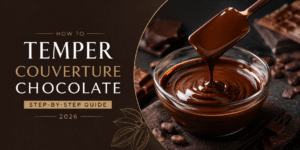
Have you ever wondered why professional chocolates have a glossy finish, a satisfying snap, and a smooth melt-in-the-mouth texture? The secret isn’t just using premium chocolate—it’s tempering.
If you’re searching for How to temper couverture chocolate, this complete chocolate tempering guide will walk you through everything you need to know. Whether you’re a home baker, pastry chef, chocolatier, bakery owner, or dessert enthusiast, mastering this technique can dramatically improve the quality of your chocolate creations.
We’ll explain the science behind tempering couverture chocolate, the correct chocolate tempering temperature, common mistakes to avoid, and professional tips for achieving flawless results every time.
If you’re looking for premium chocolate for tempering, explore our complete collection of Couverture Chocolates
What is Couverture Chocolate?
Before learning How to temper chocolate, it’s important to understand what makes couverture chocolate different from regular chocolate.
Couverture chocolate is a premium-quality chocolate that contains a higher percentage of cocoa butter, typically between 31% and 39%. This higher cocoa butter content allows the chocolate to melt smoothly, flow easily, and develop an exceptional shine after tempering.
Because of its superior quality, couverture chocolate is widely used by:
- Professional chocolatiers
- Pastry chefs
- Cake artists
- Luxury bakeries
- Chocolate manufacturers
- Home baking enthusiasts
Unlike compound chocolate, couverture chocolate requires tempering before use. This process stabilizes the cocoa butter crystals, giving the chocolate its signature appearance and texture.
Why is tempering couverture chocolate important?
Many beginners ask:
“Can I simply melt couverture chocolate and use it?”
Technically yes—but the results won’t be professional.
Without tempering, chocolate may become
- Dull instead of shiny
- Soft at room temperature
- Difficult to remove from molds
- Streaky or blotchy
- Sticky when touched
- Lacking the characteristic crisp snap
Proper Tempering couverture chocolate ensures that stable cocoa butter crystals form correctly, resulting in chocolate that looks and tastes premium.
Benefits of Tempering Chocolate
✔ Beautiful glossy finish
✔ Crisp snap when broken
✔ Smooth texture
✔ Better shelf life
✔ Easy mold release
✔ Professional appearance
✔ Resistant to bloom
✔ Perfect for coating, molding, and decorations
Whether you’re making chocolate bars, truffles, bonbons, or cake decorations, tempering is an essential skill.
Which Couverture Chocolate is Best for Tempering?
Almost all premium couverture chocolates can be tempered successfully. However, choosing high-quality chocolate significantly improves the final result.
At Walksea Industries, you’ll find premium options suitable for various applications:
Dark Couverture Chocolate
Ideal for:
- Chocolate bars
- Ganache
- Brownies
- Cookies
- Truffles
- Premium desserts
Milk Couverture Chocolate
Perfect for:
- Filled chocolates
- Mousse
- Chocolate coatings
- Bakery products
- Celebration desserts
White Couverture Chocolate
Best suited for:
- Decorative work
- Drizzles
- Molds
- Premium confectionery
- Wedding desserts
Choosing the right couverture chocolate for your recipe is the first step toward achieving professional-quality results.
Chocolate Tempering Temperature Chart
One of the most important aspects of how to Temper Couverture Chocolate is maintaining the correct temperature throughout the tempering process. Every type of couverture chocolate has a different cocoa butter content, which affects its melting and working temperatures.
| Chocolate Type | Melt Temperature | Cool Temperature | Working Temperature |
| Dark Couverture Chocolate | 45–50°C | 27–28°C | 31–32°C |
| Milk Couverture Chocolate | 40–45°C | 26–27°C | 29–30°C |
| White Couverture Chocolate | 40–45°C | 25–26°C | 28–29°C |
Maintaining these chocolate tempering temperatures helps stabilize cocoa butter crystals, resulting in chocolate with a glossy finish, firm texture, and satisfying snap.
Pro Tip: Always use a digital food thermometer for accurate temperature control. Even a small temperature variation can affect the tempering process.
Tools You’ll Need for Tempering Couverture Chocolate
Before you begin, gather these essential tools:
- Premium Walksea Couverture Chocolate
- Heatproof glass or stainless-steel bowl
- Saucepan (for double boiler method)
- Silicone spatula
- Chocolate scraper
- Digital thermometer
- Marble slab (optional)
- Dry kitchen towel
- Chocolate moulds (if making bars or pralines)
Using clean and completely dry tools is essential, as even a small amount of water can cause chocolate to seize.
How to Temper Couverture Chocolate: Step-by-Step Guide
Whether you’re a beginner or a professional baker, this simple process will help you achieve beautifully tempered chocolate.
Step 1: Chop the Chocolate
If you’re using chocolate bars or blocks, chop them into small, even-sized pieces. Uniform pieces melt more evenly and reduce the risk of overheating.
If you’re using Walksea Couverture Chocolate Callets, this step can be skipped since callets are designed for easy melting.
Internal Link Opportunity:
Explore premium Walksea Couverture Chocolates suitable for tempering and baking:
Step 2: Melt the Chocolate
Place about two-thirds of the chocolate into a heatproof bowl over a pan of gently simmering water (double-boiler method). Stir continuously while monitoring the temperature.
Heat according to the chocolate type:
- Dark Couverture Chocolate: 45–50°C
- Milk Couverture Chocolate: 40–45°C
- White Couverture Chocolate: 40–45°C
Avoid direct heat, as overheating can damage the cocoa butter and affect the final texture.
Step 3: Cool the Chocolate
Remove the bowl from the heat and gradually add the remaining one-third of unmelted chocolate while stirring continuously.
This “seeding method” introduces stable cocoa butter crystals and helps cool the chocolate to the required temperature.
Target cooling temperatures:
- Dark Chocolate: 27–28°C
- Milk Chocolate: 26–27°C
- White Chocolate: 25–26°C
Continue stirring until all the chocolate has melted completely.
Step 4: Reheat to Working Temperature
Once cooled, gently reheat the chocolate to its working temperature.
Recommended working temperatures:
- Dark Couverture Chocolate: 31–32°C
- Milk Couverture Chocolate: 29–30°C
- White Couverture Chocolate: 28–29°C
Now your chocolate is perfectly tempered and ready for moulding, dipping, coating, decorating, or making chocolate bars.
How to Test if Your Chocolate is Properly Tempered
Before using the chocolate, perform a quick temper test.
Dip a spoon, palette knife, or small strip of baking paper into the chocolate and leave it at room temperature.
Properly tempered chocolate should:
✔ Set within 3–5 minutes
✔ Have a glossy finish
✔ Feel firm when touched
✔ Break with a clean snap
If the chocolate remains soft or develops dull streaks, it may need to be tempered again.
Chocolate Tempering Tips from Professional Chefs
Professional chocolatiers rely on a few simple techniques to achieve consistent results.
- Always Use High-Quality Couverture Chocolate
Premium couverture chocolate contains a higher percentage of cocoa butter, making it ideal for tempering.
- Keep Water Away
Even a few drops of water can cause chocolate to seize, turning it thick and grainy.
Always ensure bowls, spatulas, and utensils are completely dry before starting.
- Stir Continuously
Gentle, continuous stirring helps distribute heat evenly and encourages the formation of stable cocoa butter crystals.
- Avoid Overheating
Heating chocolate above the recommended temperature can destroy its crystal structure, making tempering more difficult.
Always heat slowly and monitor the temperature closely.
- Maintain the Working Temperature
While molding or coating, keep the chocolate within its recommended working temperature range.
If it cools too much, gently warm it in short intervals without exceeding the maximum temperature.
- Common Mistakes to Avoid
Even experienced bakers occasionally make mistakes when tempering chocolate. Avoid these common issues:
- Overheating the Chocolate
Excessive heat damages cocoa butter crystals and can result in dull, soft chocolate.
- Using Wet Equipment
Moisture causes chocolate to seize, making it unsuitable for moulding or coating.
- Ignoring Temperature Checks
Guessing the temperature often leads to failed tempering. A digital thermometer is one of the best investments for consistent results.
- Refrigerating Immediately
Allow tempered chocolate to set naturally at room temperature whenever possible. Sudden chilling can lead to condensation and sugar bloom.
- Using Low-Quality Chocolate
The best chocolate for tempering is genuine couverture chocolate with a high cocoa butter content. Using premium chocolate helps produce professional-quality results with better shine, texture, and flavor.
Frequently Asked Questions (FAQs)
- What is the best way to temper couverture chocolate?
The best way to temper couverture chocolate is by using the seeding method. Melt two-thirds of the chocolate to the recommended melting temperature, then gradually add the remaining one-third while stirring continuously until it cools to the correct temperature. Finally, gently reheat it to the ideal working temperature. This method is beginner-friendly, reliable, and widely used by professional chocolatiers.
- Why is tempering chocolate important?
Tempering stabilizes the cocoa butter crystals in chocolate. Properly tempered chocolate develops:
- A beautiful glossy finish
- A crisp snap
- Smooth texture
- Better resistance to melting
- Easy release from molds
- Longer shelf life
Without tempering, chocolate may appear dull, develop white streaks (fat bloom), or become soft at room temperature.
- Can I temper chocolate without a thermometer?
Yes, but using a digital thermometer is highly recommended. Accurate temperature control is the key to successful chocolate tempering, especially for beginners. It helps you achieve consistent results and reduces the chances of overheating or under-tempering.
- Which chocolate is best for tempering?
Couverture chocolate is considered the best chocolate for tempering because it contains a higher percentage of cocoa butter. This allows it to melt smoothly, temper easily, and deliver a glossy finish with a satisfying snap.
At Walksea Industries, you can choose from:
- Dark Couverture Chocolate
- Milk Couverture Chocolate
- White Couverture Chocolate
These premium chocolates are ideal for professional baking, confectionery, molding, coating, ganache, truffles, and artisan desserts.
- Why does tempered chocolate turn white?
White streaks or patches are usually caused by fat bloom or sugar bloom.
Common reasons include:
- Incorrect tempering
- Sudden temperature changes
- Refrigerating chocolate immediately after molding
- Exposure to moisture
- Improper storage
Proper tempering and correct storage help maintain the chocolate’s shine and texture.
- Can I reuse tempered chocolate?
Yes. If your tempered chocolate cools and hardens, you can melt and temper it again by following the correct temperature guidelines. As long as the chocolate remains clean and free from moisture, it can be reused multiple times.
Why Choose Walksea Couverture Chocolate?
When it comes to creating premium desserts and chocolates, the quality of the chocolate makes all the difference. Walksea Industries offers a carefully crafted range of couverture chocolates designed to deliver exceptional performance for professionals and home bakers alike.
Premium Quality Ingredients
Walksea Couverture Chocolate is made using carefully selected cocoa ingredients to provide a rich taste, smooth texture, and excellent workability.
Higher Cocoa Butter Content
The higher cocoa butter content makes Walksea Couverture Chocolate ideal for tempering, molding, coating, and creating premium chocolate decorations.
Suitable for Multiple Applications
Walksea Couverture Chocolate is perfect for:
- Chocolate bars
- Bonbons
- Truffles
- Ganache
- Brownies
- Cookies
- Cakes
- Pastries
- Mousses
- Chocolate decorations
- Enrobed confectionery
- Bakery products
Explore Our Premium Couverture Chocolate Range
Browse the complete range of premium couverture chocolates here:
Couverture Chocolate Collection
https://walkseaindustries.com/product-category/coverture-chocolates/
You can also explore individual product categories:
- Dark Couverture Chocolate
- Milk Couverture Chocolate
- White Couverture Chocolate
Adding these internal links helps users easily discover the right chocolate for their needs while strengthening your website’s SEO through improved internal linking.
Expert Chocolate Tempering Tips
If you want to temper chocolate like a professional, keep these tips in mind:
✔ Use high-quality couverture chocolate.
✔ Work in a cool, dry environment.
✔ Always use clean, dry utensils.
✔ Monitor temperatures with a digital thermometer.
✔ Stir continuously during the cooling stage.
✔ Avoid overheating the chocolate.
✔ Perform a temper test before molding.
✔ Store finished chocolates in a cool, dry place (around 16–20°C).
These simple practices can significantly improve the appearance, texture, and consistency of your chocolate creations.
Final Thoughts
Learning How to Temper Couverture Chocolate is an essential skill for anyone passionate about baking or chocolate making. While the process may seem technical at first, following the correct temperatures and techniques makes it easy to achieve professional-quality results.
Properly tempered chocolate delivers the glossy finish, crisp snap, and smooth texture that define premium chocolate products. Whether you’re making handcrafted truffles, chocolate bars, molded pralines, or elegant cake decorations, tempering ensures your creations look and taste their best.
Choosing a high-quality couverture chocolate is equally important. Premium chocolate with a balanced cocoa butter content not only tempers more effectively but also enhances flavor, workability, and the overall finish of your desserts.
Shop Premium Walksea Couverture Chocolate
Ready to create professional-quality chocolates at home or in your bakery?
Explore the complete range of Walksea Couverture Chocolates designed for baking, confectionery, and chocolate making.
👉 Shop Now
NOTE: Whether you need Dark, milk, or white couverture chocolate, Walksea Industries offers premium-quality products that help you achieve consistent, delicious, and beautifully finished chocolate creations every time.