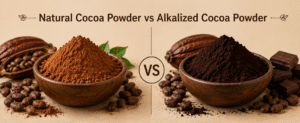
 Cocoa powder is one of the most widely used cocoa ingredients in the food and beverage industry. From chocolates and cakes to biscuits, ice creams, beverages, and desserts, cocoa powder provides the characteristic chocolate flavor, aroma, and color that consumers love.
However, not all cocoa powders are the same.
Two of the most commonly used varieties are natural cocoa powder and alkalized cocoa powder, also known as Dutch-process cocoa powder. Although both originate from cocoa beans, they differ in processing, acidity, color, flavor, and performance in different food applications.
Understanding the difference between natural cocoa powder vs alkalized cocoa powder can help bakers, chocolatiers, food manufacturers, beverage companies, and other businesses select the right ingredient for their products.
In this guide, we will explain what natural and alkalized cocoa powders are, how they differ, where they are used, and how to choose the right cocoa powder for your application.
What Is Cocoa Powder?
Cocoa powder is produced from cocoa beans through a series of processing steps.
The cocoa beans are generally fermented, dried, roasted, and processed to obtain cocoa liquor or cocoa mass. A portion of the cocoa butter is then removed from the cocoa mass, leaving behind a solid cocoa cake.
This cocoa cake is finely milled to produce cocoa powder.
Depending on how the cocoa is processed, manufacturers can produce different types of cocoa powder, including:
- Natural cocoa powder
- Alkalized cocoa powder
- Different shades of alkalized cocoa powder
- Specialty cocoa powders for specific food applications
For food manufacturers, selecting the appropriate cocoa powder is important because the ingredient can influence the taste, color, pH, aroma, texture, and overall appearance of the finished product.
What Is Natural Cocoa Powder?
Natural cocoa powder is cocoa powder that has not undergone an alkalization process.
It retains much of the cocoa bean’s naturally occurring acidity and typically has a lighter brown color compared with heavily alkalized cocoa powders.
Natural cocoa powder generally has the following:
- A naturally acidic pH
- Light to medium brown color
- Strong, characteristic cocoa flavor
- Distinct cocoa aroma
- Natural cocoa acidity
- Good performance in many bakery and beverage applications
Because of its natural acidity, natural cocoa powder can work particularly well in recipes where an alkaline ingredient such as baking soda is used as part of the leavening system.
What Is Alkalized Cocoa Powder?
Alkalized cocoa powder, commonly known as Dutch-process cocoa powder, is cocoa powder that has undergone an alkalization process.
During this process, cocoa is treated with an alkaline substance to reduce its natural acidity. The degree of alkalization can vary, resulting in cocoa powders with different colors, pH levels, flavors, and application characteristics.
Alkalized cocoa powder can range from lighter brown shades to very dark brown or nearly black cocoa powders depending on the processing level.
Common characteristics include:
- Reduced acidity
- Smoother cocoa flavor
- Darker color
- Different pH compared with natural cocoa powder
- Excellent visual appeal in many chocolate products
- Suitable for a wide range of bakery, beverage, dairy, and confectionery applications
The level of alkalization is an important consideration because different food products may require different cocoa characteristics.
Natural Cocoa Powder vs Alkalized Cocoa Powder: Key Differences
The biggest differences between natural and alkalized cocoa powders are related to processing, acidity, pH, color, flavor, and application.
| Feature | Natural Cocoa Powder | Alkalized Cocoa Powder |
| Processing | Not alkalized | Treated through alkalization |
| Acidity | Naturally acidic | Lower acidity |
| pH | Generally lower | Generally higher |
| Color | Light to medium brown | Brown to very dark brown |
| Flavor | More pronounced cocoa acidity | Generally smoother and milder |
| Appearance | Natural cocoa color | Darker, more uniform appearance |
| Common Applications | Bakery, beverages, desserts | Bakery, beverages, confectionery, dairy |
| Baking Consideration | Often paired with baking soda | Recipe formulation may differ |
Exact characteristics can vary depending on cocoa bean origin, processing conditions, alkalization level, fat content, and manufacturer specifications.
- Difference in pH and Acidity
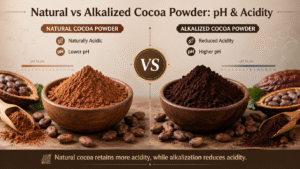
One of the most important differences between natural and alkalized cocoa powder is acidity.
Natural cocoa powder retains more of the cocoa bean’s natural acidity. Alkalized cocoa powder, on the other hand, is processed to neutralize part of this acidity.
This difference can become particularly important in baking.
For example, when developing a cake or brownie recipe, the cocoa powder’s acidity can interact with the leavening system. Therefore, professional food manufacturers should consider the complete formulation rather than replacing one cocoa powder with another on a one-to-one basis without testing.
- Difference in Color
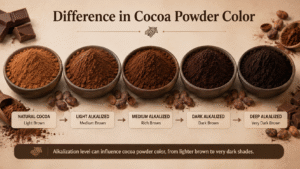
Color is another noticeable difference.
Natural cocoa powder generally has a lighter brown appearance, while alkalized cocoa powder can have a significantly darker color.
Depending on the alkalization level, alkalized cocoa can range from:
Light Brown → Medium Brown → Dark Brown → Very Dark/Black
This makes alkalized cocoa powder particularly useful when manufacturers want to achieve a deeper chocolate color in products.
For example, darker cocoa powders can be used in:
- Chocolate biscuits
- Brownies
- Cakes
- Chocolate beverages
- Ice creams
- Cookies
- Confectionery products
For commercial applications, the desired color should always be considered alongside flavor and formulation requirements.
- Difference in Flavor
Natural cocoa powder generally has a more pronounced cocoa flavor with noticeable acidity.
Alkalized cocoa powder tends to have a smoother, less acidic and more rounded cocoa profile.
The final flavor, however, depends on several factors, including:
- Cocoa bean origin
- Roasting conditions
- Cocoa butter content
- Processing method
- Degree of alkalization
- Product formulation
Therefore, selecting cocoa powder based only on color is not recommended. Flavor and application requirements should also be evaluated.
- Difference in Baking Performance
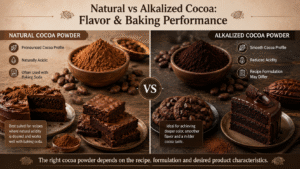
The difference in acidity can affect baking performance.
Natural cocoa powder is naturally acidic and can contribute acidity to a recipe. It is commonly used in formulations where baking soda is part of the leavening system.
Alkalized cocoa powder has lower acidity, so the recipe’s overall leavening system needs to be considered carefully.
This is especially important for commercial bakeries and food manufacturers because changing the cocoa powder can affect:
- Rise
- Texture
- Color
- Flavor
- Moisture perception
- Final product consistency
For industrial production, it is advisable to test cocoa powder according to the manufacturer’s specifications before making formulation changes.
You may have seen the term “Dutch-process cocoa powder while researching cocoa.
In many contexts, Dutch-process cocoa powder refers to alkalized cocoa powder.
The name comes from the historical development of the alkalization process associated with Dutch cocoa processing.
Today, alkalized cocoa powder is available in different levels of alkalization and shades, allowing manufacturers to select cocoa based on their desired application.
Which Cocoa Powder Is Better?
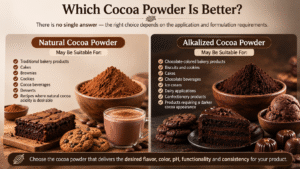
There is no single answer to whether natural or alkalized cocoa powder is better.
The right choice depends on the application and formulation requirements.
Natural Cocoa Powder May Be Suitable For:
- Traditional bakery products
- Cakes
- Brownies
- Cookies
- Cocoa beverages
- Desserts
- Recipes where natural cocoa acidity is desirable
Alkalized Cocoa Powder May Be Suitable For:
- Chocolate-colored bakery products
- Biscuits and cookies
- Cakes
- Chocolate beverages
- Ice cream
- Dairy applications
- Confectionery products
- Products requiring a darker cocoa appearance
For food manufacturers, the best cocoa powder is the one that delivers the desired flavor, color, pH, functionality, and consistency for the specific formulation.
How to Choose Between Natural and Alkalized Cocoa Powder
Before selecting a cocoa powder, consider the following factors.
- Desired Color
If your product requires a lighter natural chocolate color, natural cocoa powder may be suitable.
If you want a deeper brown or darker chocolate appearance, an alkalized cocoa powder may be a better option.
- Desired Flavor
For a more pronounced natural cocoa profile, natural cocoa powder can be considered.
For a smoother, less acidic cocoa profile, alkalized cocoa may be preferable.
- Recipe Formulation
Always consider the recipe’s leavening system and overall pH.
This is particularly important for bakery applications.
- Product Application
Different applications require different cocoa characteristics.
A cocoa powder used for beverages may have different requirements from cocoa powder intended for biscuits, ice cream, or industrial bakery production.
- Technical Specifications
For commercial applications, buyers should evaluate specifications such as:
- pH
- Cocoa butter/fat content
- Color
- Moisture
- Fineness
- Microbiological parameters
- Flavor profile
- Application suitability
Working with a reliable cocoa powder supplier in India can help manufacturers select the appropriate specification for their production requirements.
Applications of Cocoa Powder
Both natural and alkalized cocoa powders are used across a wide range of food applications.
Bakery
Cocoa powder is widely used in:
- Cakes
- Brownies
- Cookies
- Biscuits
- Muffins
- Pastries
Beverages
Cocoa powder can be used in:
- Hot chocolate
- Chocolate drinks
- Milk-based beverages
- Instant beverage mixes
- Smoothies
Dairy Products
Cocoa is commonly incorporated into:
- Ice cream
- Chocolate milk
- Yogurt
- Dairy desserts
Confectionery
Cocoa ingredients are essential in many chocolate and confectionery formulations.
For manufacturers looking for a complete range of cocoa ingredients, products such as cocoa butter, cocoa mass, and cocoa nibs can complement cocoa powder in different applications.
Why Cocoa Powder Quality Matters
For commercial food production, cocoa powder is more than just a source of chocolate flavor.
Its technical characteristics can directly influence the finished product.
Important quality parameters include:
Color + Flavor + pH + Fat Content + Moisture + Fineness + Microbiological Quality
A consistent cocoa powder specification helps manufacturers maintain consistent product quality from batch to batch.
This is particularly important for businesses producing food products at scale.
Natural vs Alkalized Cocoa Powder: Which Should Food Manufacturers Choose?
For industrial users, the decision should be based on the specific product formulation.
For example:
Bakery Manufacturer: Consider acidity, leavening system, flavor, and color.
Beverage Manufacturer: Consider solubility/dispersibility, flavor, color, and formulation requirements.
Ice Cream Manufacturer: Consider cocoa color, flavor, and compatibility with the dairy formulation.
Confectionery Manufacturer: Consider cocoa flavor, color, fat content, and overall formulation.
Rather than choosing cocoa powder solely based on whether it is natural or alkalized, manufacturers should evaluate the complete technical specification and intended application.
Walksea Industries – Cocoa Products for Food Manufacturers
At Walksea Industries, we offer cocoa ingredients designed for different food and industrial applications.
Our cocoa product range includes:
Whether you are a bakery, chocolate manufacturer, beverage company, dairy manufacturer, confectionery producer, or food processing business, selecting the right cocoa ingredient can help you achieve the desired product characteristics.
Explore our [Cocoa Products] to learn more about our range and applications.
Businesses looking for bulk cocoa ingredients can also [contact Walksea Industries] for product specifications and requirements.
Frequently Asked Questions
Q: Is natural cocoa powder better than alkalized cocoa powder?
Neither is universally better. The right choice depends on the recipe, desired color, flavor, acidity, and technical requirements of the application.
Q: Is alkalized cocoa powder the same as Dutch-process cocoa powder?
Generally, Dutch-process cocoa refers to cocoa powder that has undergone an alkalization process. However, alkalization levels and product specifications can vary.
Q: Which cocoa powder is darker?
Alkalized cocoa powder is generally darker than natural cocoa powder, although the exact shade depends on the degree of alkalization.
Q: Can I substitute natural cocoa powder for alkalized cocoa powder?
Substitution may require recipe adjustments because the two cocoa powders have different acidity and pH characteristics. This is especially important in baking recipes.
Q: Which cocoa powder is best for baking?
It depends on the recipe. Natural cocoa powder can work well in formulations using baking soda, while alkalized cocoa powder can be selected when a smoother flavor or darker color is desired.
Q: What is alkalized cocoa powder used for?
Alkalized cocoa powder is used in various applications including bakery products, biscuits, beverages, dairy products, ice cream, desserts, and confectionery.
Q: What is natural cocoa powder used for?
Natural cocoa powder is commonly used in bakery products, beverages, desserts, brownies, cakes, cookies, and other food applications where its characteristic cocoa flavor and acidity are desirable.
Final Thoughts
Understanding the difference between natural cocoa powder vs alkalized cocoa powder is important when selecting cocoa ingredients for food production.
Natural cocoa powder retains more of its natural acidity and typically offers a lighter color and more pronounced cocoa profile. Alkalized cocoa powder has reduced acidity and can provide a smoother flavor and darker color, depending on the degree of alkalization.
The best option ultimately depends on your product formulation, desired color, flavor profile, pH requirements, and manufacturing process.
For commercial and industrial applications, always evaluate the cocoa powder’s technical specifications and conduct product trials before finalizing your ingredient selection.
Looking for quality cocoa ingredients for your business? Explore Walksea Industries’ range of cocoa products or contact our team for product specifications and bulk requirements.